
2025.07.05
Was ist eine Revisions-Adipositaschirurgie und welche Methoden werden angewendet?
### What Is Revisional Bariatric Surgery and What Methods Are Used?
**Bariatric surgery** is a well-established method for achieving long-term weight loss and improving obesity-related health conditions. However, in some cases, patients do not achieve the desired results after their initial procedure or experience complications. This is where **revisional bariatric surgery** comes into play. It involves performing a second surgery to correct, modify, or replace the initial surgery. In this article, we will explore what revisional bariatric surgery is, why it may be needed, and the different methods used for revision procedures.
#### What Is Revisional Bariatric Surgery?
**Revisional bariatric surgery** refers to a follow-up surgical procedure performed on patients who have previously undergone weight-loss surgery but did not achieve adequate weight loss or experienced complications. The purpose of revisional surgery is to correct issues, enhance weight loss, and improve the patient's quality of life by addressing complications from the initial surgery.
Unlike the first surgery, which aims to achieve significant weight loss, revisional surgery is typically done to either fix or upgrade the previous procedure to improve outcomes.
#### Why Is Revisional Bariatric Surgery Needed?
Revisional surgery may be necessary for several reasons:
1. **Inadequate Weight Loss or Weight Regain**
* **Stomach Stretching After Sleeve Gastrectomy**: After a sleeve gastrectomy, the stomach may stretch, leading to weight regain.
* **Gastric Band Failure**: The gastric band may slip, lose effectiveness, or fail to provide significant weight loss.
2. **Complications**
* **GERD (Gastroesophageal Reflux Disease)**: Some patients may experience reflux after surgery, leading to discomfort and health issues.
* **Swallowing Difficulties or Hiatal Hernia**: Issues such as trouble swallowing or the formation of a hiatal hernia can arise after bariatric surgery.
* **Dumping Syndrome**: This condition, commonly occurring after gastric bypass, involves symptoms like nausea, dizziness, and rapid heartbeat after eating.
3. **Technical Issues**
* **Poor Technique in the Initial Surgery**: If the first surgery was not performed properly, a revision might be necessary.
* **Material Failures**: For example, if the gastric band slips or malfunctions, revision surgery is required.
#### Methods Used in Revisional Bariatric Surgery
There are several different methods that can be employed in revisional bariatric surgery, depending on the original procedure and the specific complications experienced by the patient.
1. **Sleeve Gastrectomy Revision**
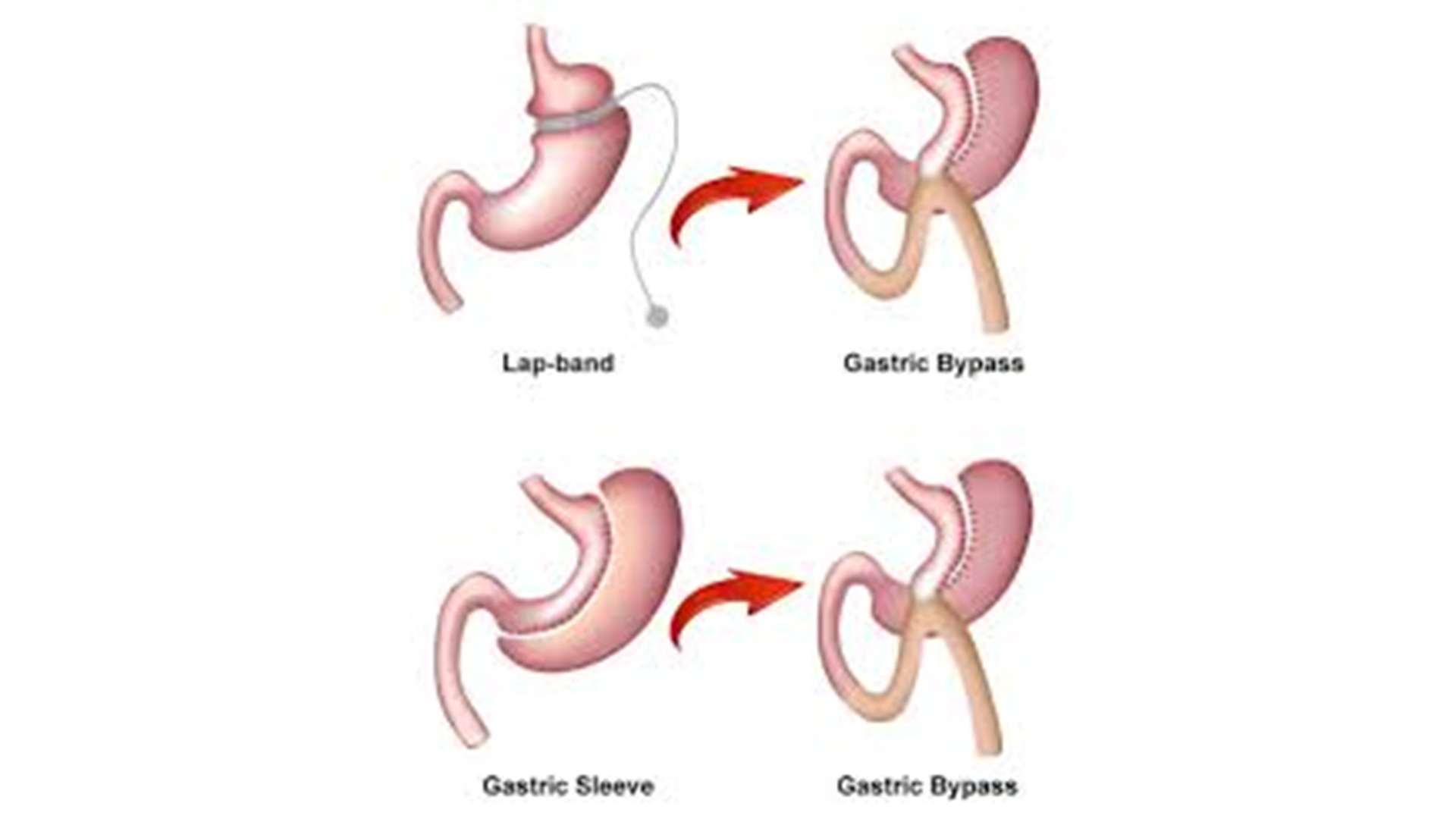
* **Resleeving or Conversion to Gastric Bypass**: If the stomach has stretched or the results have plateaued, the procedure may be repeated or converted into a gastric bypass, particularly for patients with reflux.
* **Common in Reflux Cases**: This method is particularly effective in patients who suffer from **gastroesophageal reflux disease (GERD)** after the initial surgery.
2. **Gastric Bypass Revision**
* **Resizing or Restructuring the Pouch and Connections**: The pouch or the connections between the stomach and intestines can be resized or restructured to restore weight control and improve outcomes.
* **Helps Reestablish Weight Control**: By modifying the size of the pouch or adjusting the digestive connections, better control over weight can be achieved.
3. **Conversion from Mini-Gastric Bypass to Roux-en-Y Gastric Bypass**
* **Ideal for Bile Reflux**: This revision method is particularly beneficial for patients experiencing bile reflux, which can cause discomfort and other complications.
* **Better Control Over Nutrient Absorption and Reflux**: The Roux-en-Y bypass provides better nutrient absorption control and helps manage reflux.
4. **Removal of Gastric Band and New Surgery**
* **Band Removal and Replacement with Sleeve Gastrectomy or Bypass**: If a gastric band is not functioning properly, it can be removed, and the procedure can be replaced with a sleeve gastrectomy or gastric bypass.
* **Updating the Surgical Method**: This revision brings the procedure up to modern standards, improving weight loss and eliminating complications related to the band.
#### Who Is a Candidate for Revisional Surgery?
Revisional bariatric surgery is generally recommended for patients who meet specific criteria based on their previous surgical outcomes and health conditions. Candidates for revision surgery include:
* **Patients with Insufficient Weight Loss**: Those who have not achieved adequate weight loss or have regained weight 12–18 months after the original surgery.
* **Those Experiencing Severe Complications**: Patients suffering from complications such as GERD, swallowing difficulties, or dumping syndrome.
* **Individuals with a High BMI**: Patients who have regained a high body mass index (BMI) after their initial bariatric surgery.
* **Patients Who Can Follow Medical, Nutritional, and Psychological Guidelines**: Candidates must be able to adhere to post-surgery lifestyle changes, including dietary and psychological support.
#### Advantages and Disadvantages of Revisional Bariatric Surgery
**Advantages:**
* **Improved Weight Loss and Health Outcomes**: Revisional surgery can help patients achieve better weight loss and resolve obesity-related health issues.
* **Correction of Complications**: Complications like reflux, swallowing difficulties, or dumping syndrome can be corrected, leading to an improved quality of life.
* **Better Quality of Life**: By improving weight loss and resolving complications, patients often experience a better quality of life post-surgery.
**Disadvantages:**
* **Technically More Difficult**: Revisional surgery is often more complicated than the initial procedure and requires a highly skilled surgeon.
* **Higher Risk**: There is generally a higher risk associated with revisional surgery due to scar tissue and anatomical changes.
* **Longer Recovery Time**: Recovery from revisional surgery is typically longer than the initial surgery, requiring more time for healing.
#### Frequently Asked Questions (FAQs)
**1. Is revisional surgery more difficult?**
Yes, revisional surgery is technically more complex because of scar tissue and changes to the anatomy. It requires a highly experienced surgeon.
**2. Can you revise a sleeve gastrectomy?**
Yes, a sleeve gastrectomy can be revised by re-sleeving it or converting it into a gastric bypass, especially in cases of reflux.
**3. Is the second surgery riskier?**
Revisional surgery carries slightly higher risks, but with careful planning and an experienced surgical team, the outcomes can be excellent.
**4. Can I regain weight after revision surgery?**
Yes, weight regain is possible if the patient does not adhere to lifestyle changes after the surgery.
#### Conclusion
Revisional bariatric surgery offers a second chance for patients who have not achieved the desired results from their initial bariatric surgery or have encountered complications. Although revisional surgery comes with greater complexity and risk, it can lead to improved weight loss, health outcomes, and quality of life. As with any surgery, it is important for patients to consult with an experienced surgeon to determine whether revisional bariatric surgery is the best option based on their individual needs and circumstances.